EN日本語中文

Patented technology for turning companion robots into physical service agents

This portfolio focuses on the technology behind user-facing companion robots that translate third-party service requests and robot-side sensing into physical actions around an individual user.

22 Granted Patents
USUS 7 · CNCN 6 · JPJP 9
In force through 2041, filed by Panasonic Holdings Corporation
Strategic Value by Industry

Robot Developers & Manufacturers

Turn deployed companion robots into monetizable service endpoints. Use patented RaaS technology and control flows to connect robots with health, safety, insurance, and care-service partners — expanding revenue beyond hardware sales or pre-installed robot skills.

Health, Insurance & Safety Providers

Extend digital services into the user's physical world. Add premium service tiers where companion robots can prompt exercise, accompany users outdoors, guide safer movement, and provide safety-related physical support around the individual user.

Cloud & Robot API Platforms

Build a strategic intermediation layer between service providers and physical robots using this service robot technology. Covers key RaaS transactions that translate service requests into autonomous physical robot actions — enabling platform operators to orchestrate multiple services on top of companion robots.

The Protected RaaS Business Methods and Robotics UX

Five RaaS UX scenes covered by granted patents, spanning service-provider requests, robotics-operator orchestration, and robot behaviors.

SCENE 1

Context-Aware Trigger & Timing

UX Value

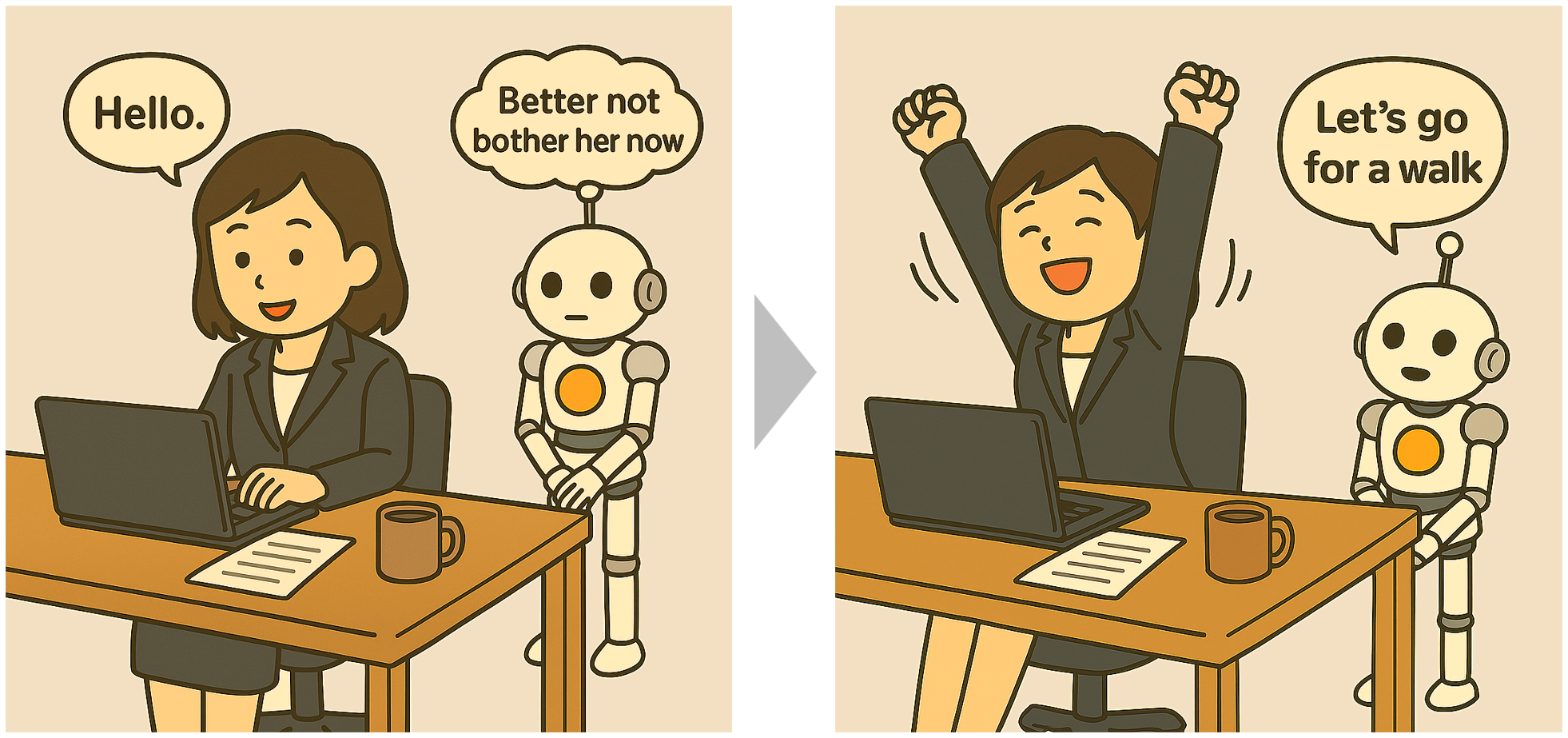
A health service can request that the robot prompt exercise — but not every moment is the right one to ask. The robot holds the request until the user is in a state to respond. Timing alone can turn the same prompt into a fundamentally different outcome.

Granted Claim Basis

The Service Provider's server evaluates biometric data to issue an exercise request. The Robotics Operator's server temporarily holds this request, acquiring dynamic state data from the robot's sensors, and only transmits the execution instruction to the robot after determining the user's state is suitable.

Granted Patents

CN 115427126 | JP 7113270
Scene 1
SCENE 2

Physical Engagement

UX Value

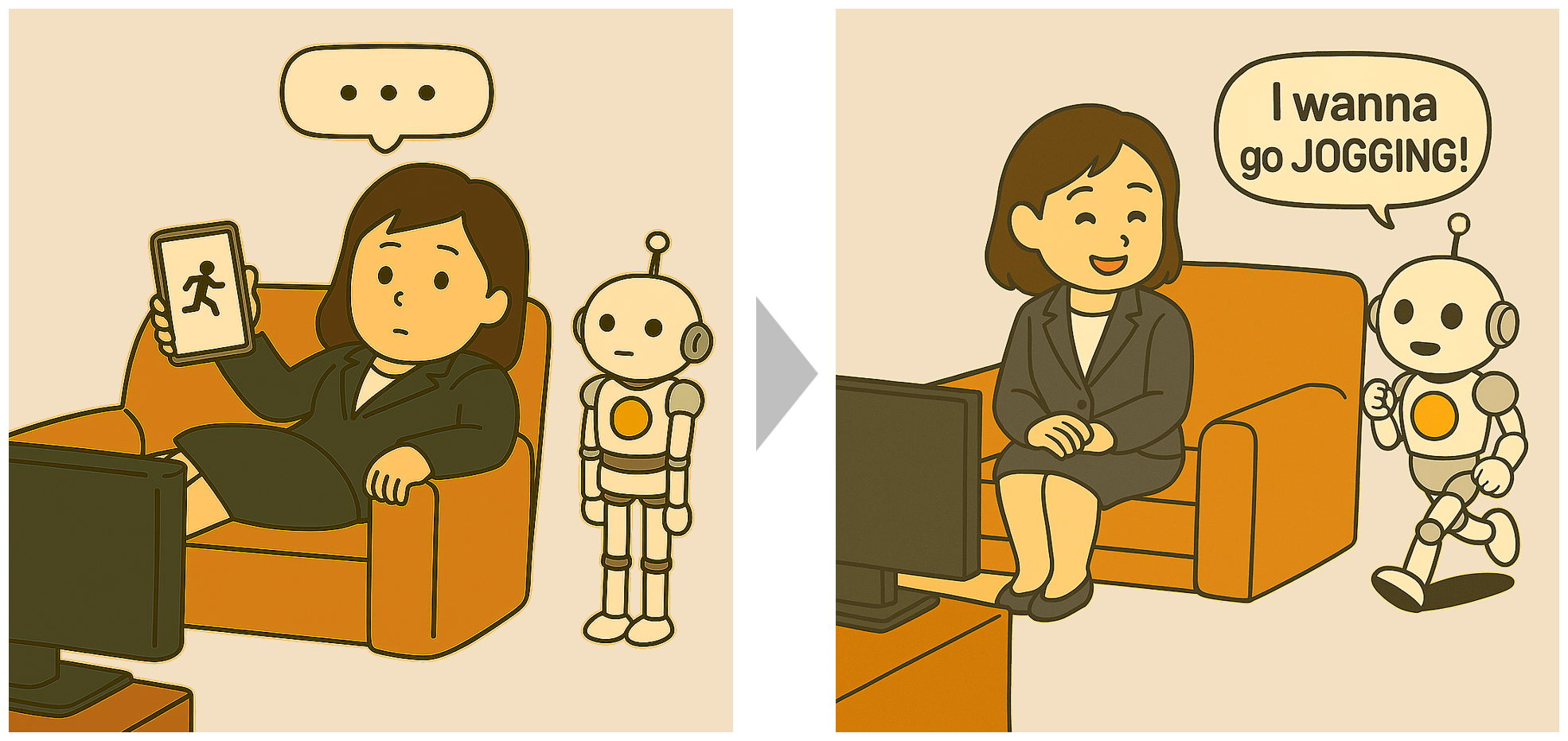
A health service can send a digital exercise prompt — but most are ignored. When activity remains insufficient, the robot moves to the user and invites her to exercise in person through physical gestures. A request from the user's familiar companion robot is fundamentally different from a digital nudge that can be swiped away.

Granted Claim Basis

The Service Provider's server sends a request to the Robotics Operator's server if the user's exercise amount remains below the target after a digital message is sent. The Robotics Operator's server then instructs the robot to intervene. The robot proceeds to the user and executes physical gestures while monitoring user behavior via its sensors to support the exercise.

Granted Patents

US 11942216, 12119111 | CN 116234664 | JP 7178579, 7357260, 7499479
Scene 2
SCENE 3

Automatic outdoor-mode transition when configured conditions are met

UX Value

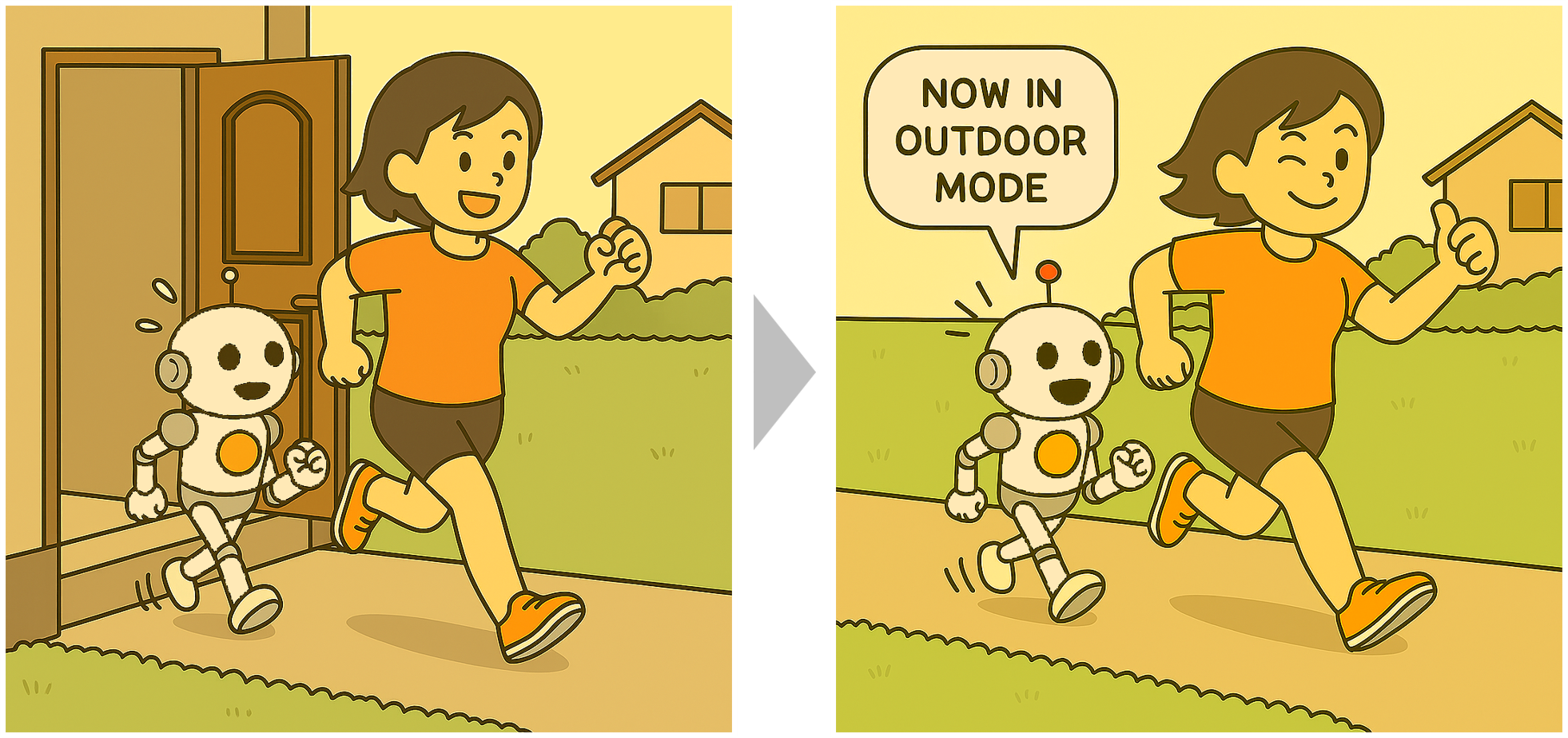
A safety service may need to support the user 24/7, both inside and outside the home. Once the robot is outside with the user, it shifts into an outdoor mode that stays close, reads the surroundings, and helps keep the user safe. This creates adaptive safety support.

Granted Claim Basis

The Service Provider's server sends a request for the robot to accompany and monitor the user outdoors. When the user then moves outside with the robot, the robot's operating mode switches from an indoor specification to an outdoor specification. This mode switch is triggered in one of two ways: by the Robotics Operator's server sending a command upon detecting the move, or by the robot itself autonomously, based on its internal sensors and the pre-acquired request.

Granted Patents

US 12169408 | CN 115428470 | JP 7153891
Scene 3
SCENE 4

Proactive Guiding & Shielding

UX Value

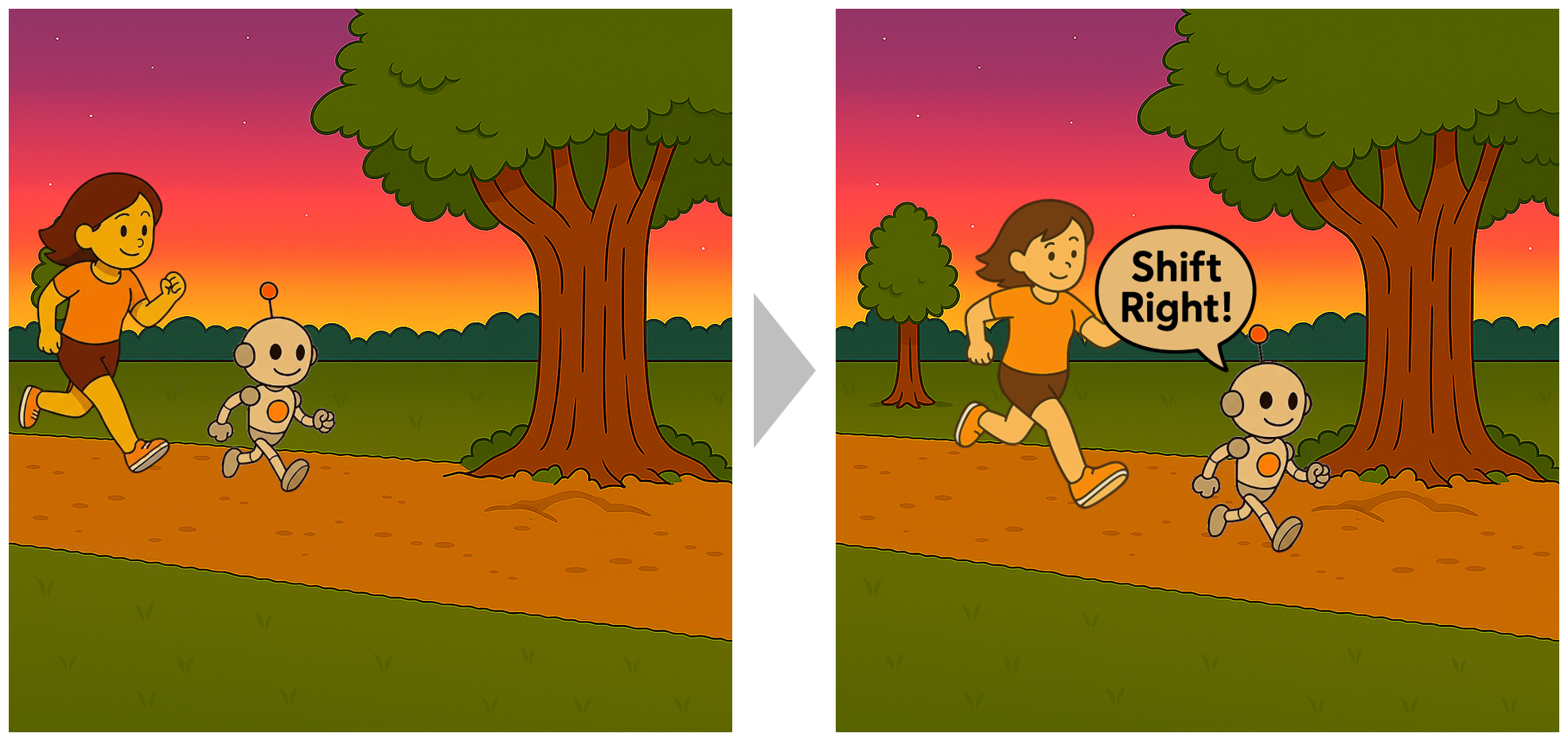
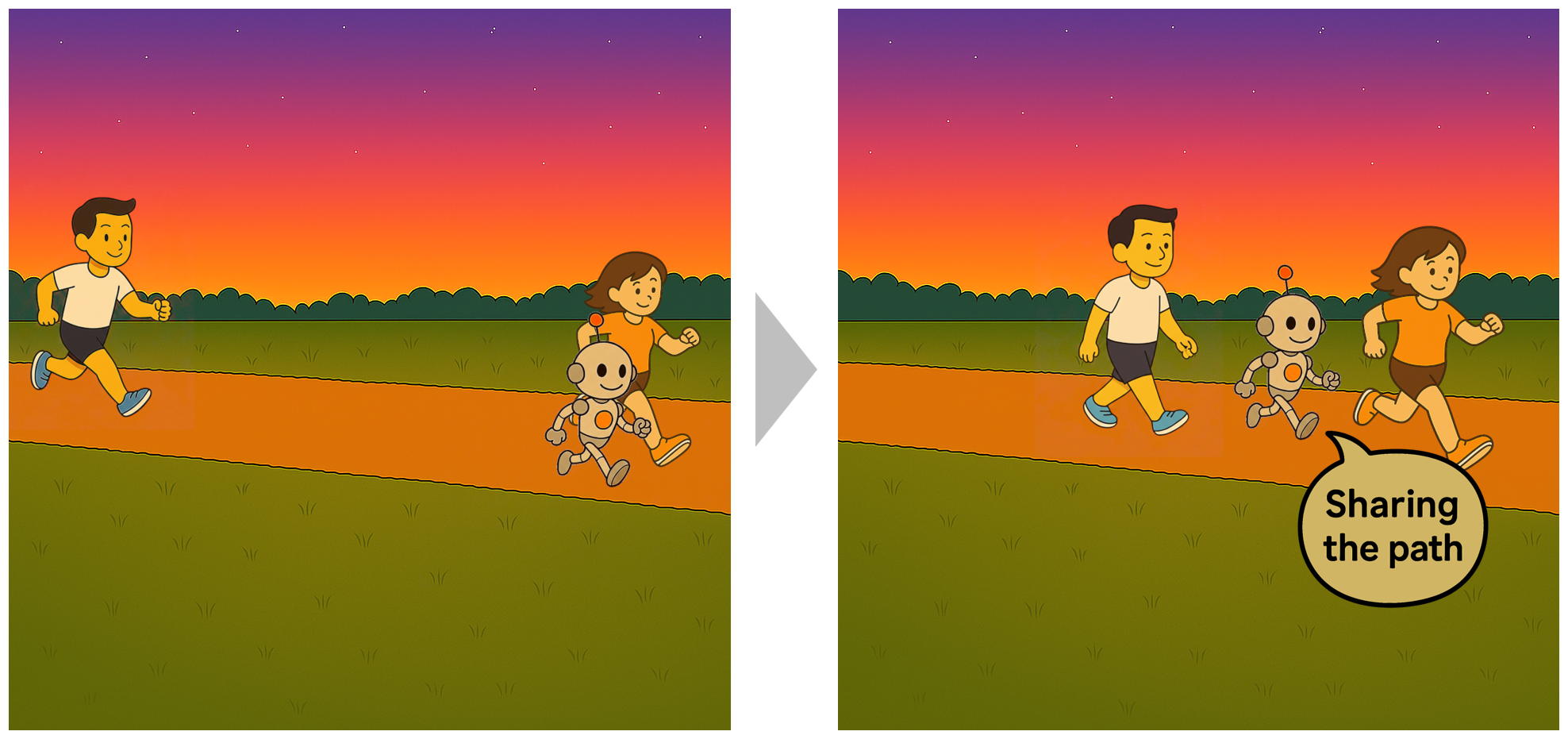
A digital safety service can ease user anxiety, but cannot physically address danger in surroundings. The robot proactively steps in front to guide the user away from hazards, or physically interposes itself as a shield against threats. Physical intervention in the real world, rather than a digital alert, creates peace of mind.

Granted Claim Basis

The robot monitors the user's location and surrounding objects via its internal sensors. If it detects a dangerous object in the path or a moving threat, the robot autonomously moves to a "lead position" to guide the user away from the hazard, or repositions itself as a "guard" between the user and the moving threat.

Granted Patents

US 11960285, 12253863 | CN 116249604 | JP 7249565, 7281654
Scene 4 Guiding
Scene 4 Shielding
SCENE 5

Illuminated Hazard Avoidance

UX Value

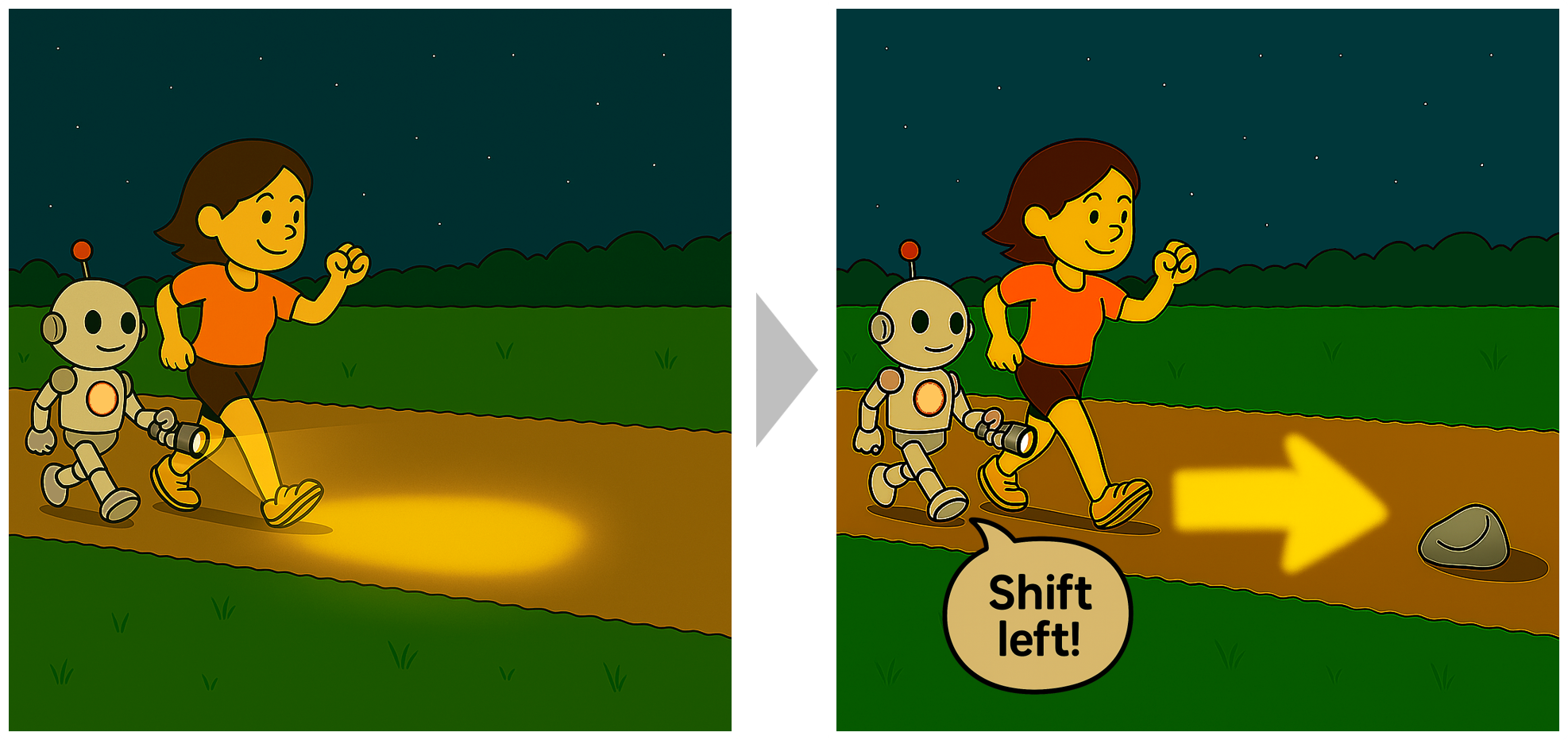
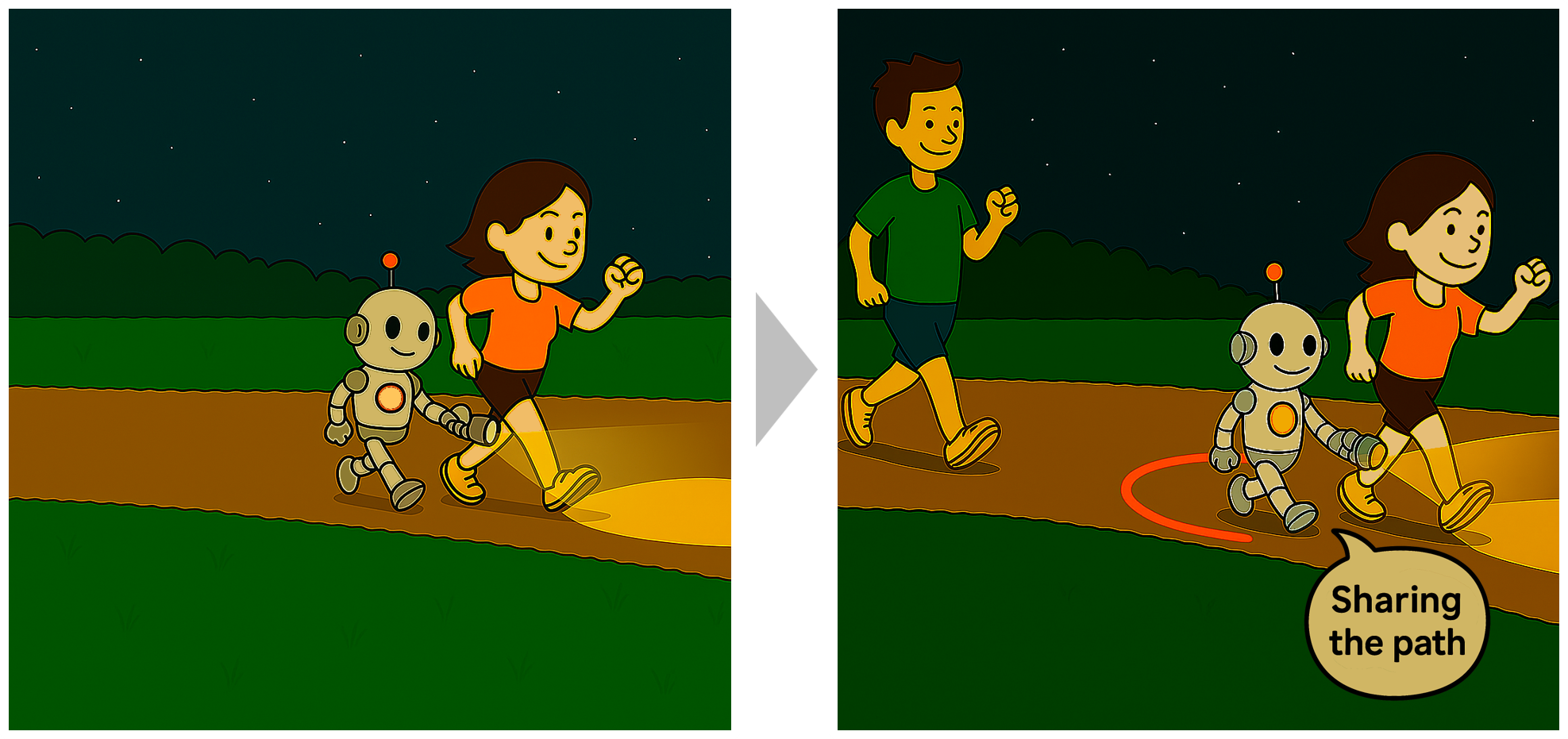
Conventional audio alerts or screen notifications require the user to process the information and decide how to react. Instead, the robot silently redirects its path-lighting to steer the user's steps away from obstacles, or projects warning lights on the ground to signal approaching danger. Guiding the user's movement visually on the ground induces a natural, almost subconscious evasion reflex.

Granted Claim Basis

The robot monitors the user's location and surrounding objects via its internal sensors. If it detects a dangerous object in the path or a moving threat, the robot autonomously redirects the light to a new area in a different direction to induce a change in the user's movement, or projects light onto an area between the user and an approaching moving threat.

Granted Patents

US 11906966, 11886190 | CN 115427910, 115877778 | JP 7117650, 7117563
Scene 5 Guiding Light
Scene 5 Warning Light